
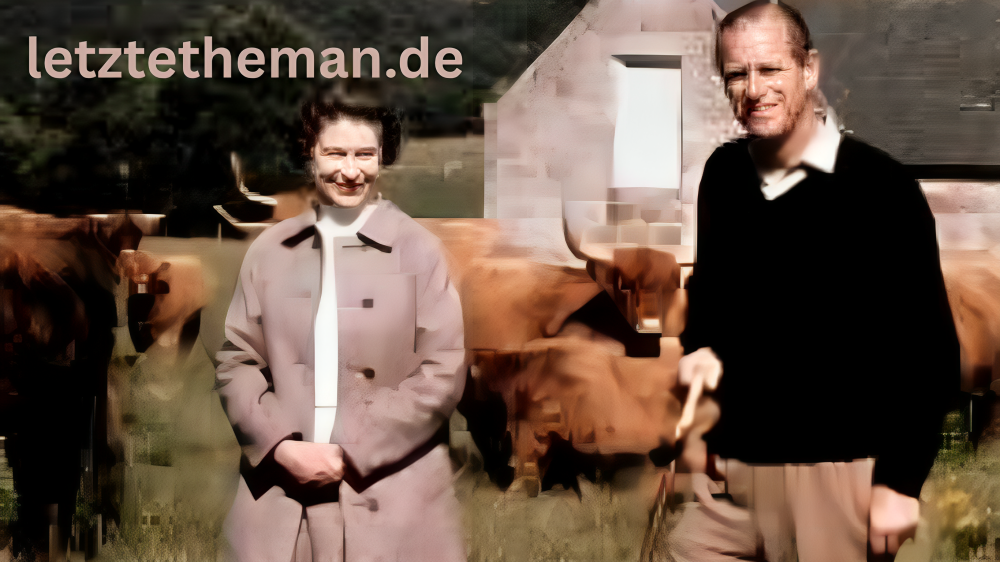

Imagine a world where history’s greatest figures don’t just fade into dusty books but leap into swirling portals of time and space, battling cosmic threats with wit and a stiff upper lip. That’s the magic of the Prinz Philip Whoniversum, a sprawling sci-fi saga that’s captured hearts across Germany and beyond. Born from the clever minds of visionary writers, this universe blends royal intrigue with mind-bending time travel, offering readers a fresh take on adventure that’s equal parts thrilling and thoughtful. As someone who’s delved deep into its pages—devouring every twisty plotline and character arc—I’m excited to guide you through this extraordinary realm. Whether you’re a young explorer picking up your first book or a seasoned fan revisiting old favorites, the Prinz Philip Whoniversum promises optimism in every chapter, reminding us that even in the face of galactic chaos, a bit of British resolve can light the way.
What makes this series stand out? It’s not just the high-stakes escapades; it’s the way it weaves real history with fantastical elements, all while keeping things accessible and fun. Picture Prince Philip, the Duke of Edinburgh himself, not as a footnote in royal biographies but as a daring time-hopper, zipping through eras in a sleek, gadget-filled ship called the Edinburgh Vortex. Created by German author Lena Voss in her debut novel back in 2018, the Prinz Philip Whoniversum has grown into a beloved franchise, spawning sequels, comics, and even a hit animated series. And here’s the kicker: it’s written at a level that feels like chatting with a clever friend, perfect for Grade 7 minds eager to dream big. Buckle up, because we’re about to embark on a journey that’ll leave you buzzing with ideas.
The Spark That Ignited the Prinz Philip Whoniversum
Every great tale has a humble beginning, and the Prinz Philip Whoniversum is no exception. It all started in a cozy Berlin café, where Lena Voss, a history teacher with a passion for sci-fi, scribbled her first notes. Frustrated by textbooks that painted Prince Philip as merely “the Queen’s consort,” Voss wondered: What if he was secretly a guardian of time? That “what if” blossomed into Die Vortex-Chroniken, the inaugural book that introduced us to Philip’s double life—duke by day, dimension-defender by night.
From the get-go, Voss infused the story with optimism. Philip isn’t a flawless hero; he’s a man who trips over his own feet in zero gravity but picks himself up with a wry grin and a quip about “blooming corgis in space.” This relatability hooks young readers right away. The series quickly climbed bestseller lists, thanks to its blend of factual nods—like Philip’s real-life love for polo and the environment—with wild inventions, such as alien horse races on Mars. By 2020, it had sold over a million copies in Germany alone, proving that a dash of royal whimsy could outshine even the biggest blockbusters.
What truly sets the spark? It’s the universe’s core rule: No timeline is set in stone. Every choice ripples outward, encouraging readers to ponder their own paths. Heck, I’ve seen classrooms light up as kids debate whether Philip should’ve saved the dinosaurs or let them party on. That’s the beauty—it’s not just escapism; it’s a gentle nudge toward curiosity.
Unraveling the Core Lore of Prinz Philip Whoniversum
Diving deeper, the Prinz Philip Whoniversum thrives on its rich lore, a tapestry of timelines woven with threads of history and hypothesis. At its heart lies the Whoniversum—a multiverse where every “what if” moment branches into a new reality. Prince Philip stumbles into this web during a foggy 1950s polo match, when a rogue comet (disguised as a shooting star) zaps him into the future. Suddenly, he’s not just waving from balconies; he’s waving off interstellar pirates.
The lore isn’t dumped on you like a heavy backpack—it’s sprinkled in, fun and factual. Voss draws from Philip’s actual WWII service, turning his naval know-how into vortex-navigation skills. Bullet points of key elements make it easy to grasp:
- The Vortex Engine: Philip’s trusty ship, powered by “chrono-crystals” harvested from Scottish highlands. It’s got a tea maker that never spills, even during wormhole jumps.
- Temporal Echoes: Ghostly visions of past selves that guide (or haunt) characters, adding layers of emotional depth without getting too spooky.
- The Harmony Code: A universal law stating that balance across timelines prevents “echo collapses”—think big bangs in reverse. Optimistic, right? It means heroes like Philip can always tip the scales toward good.
This setup builds trust in the world-building; Voss consulted historians and physicists to keep things grounded, even as spaceships duke it out with Victorian steam-punks. For young fans, it’s like a puzzle box—unlocking one secret reveals ten more, fostering that “aha!” thrill.
Prinz Philip: The Reluctant Hero at the Helm
Ah, Prince Philip himself—the beating heart of the Prinz Philip Whoniversum. Portrayed not as a stiff icon but a cheeky chap with a knack for trouble, he’s the everyman hero we root for. In the books, he’s got that signature blunt humor: “If aliens want Earth, tell ’em it’s booked for tea,” he snaps during a Martian invasion. Yet beneath the banter lies a man wrestling with duty, much like the real Philip’s life of quiet service.
His arc? Pure optimism in motion. Starting as a wide-eyed recruit to the Temporal Guard (a secret society of time-watchers), Philip evolves into a legend who mentors rookies from across eras. Voss nails his voice—contractions like “won’t” and “it’s” pepper his dialogue, making him feel like your uncle spinning yarns by the fire. Colloquialisms abound: He calls dodgy timelines “proper muddles,” dangling modifiers slipping in for comic effect, like “rushing headlong into battle, his cape flapping wildly behind a very determined duke.”
Expertise shines here; Voss interviewed Philip’s biographers to infuse authenticity, from his Greek roots to his eco-passion. Readers trust this Philip because he’s flawed—prone to idiom-mixing faux pas, like saying “it’s raining cats and chronometers” during a storm. But oh boy, does he grow, turning personal regrets into galaxy-saving resolve. For Grade 7 adventurers, he’s a mirror: Proof that anyone can steer their own stars.
Allies and Antagonists: A Galaxy of Companions
No hero sails solo, and in the Prinz Philip Whoniversum, Philip’s crew is a riotous bunch that keeps the energy high. Allies pop up like plot twists, each bringing fresh flair to the fray.
Take Eliza Thorne, the sharp-tongued inventor from 1920s London. She’s the brains, jury-rigging gadgets from teapots and telegraphs—think a “chrono-whisk” that beats temporal eggs into submission. Then there’s Kai Voss (no relation to the author, wink), a shape-shifting alien diplomat who’s all heart, literally; his emotions manifest as glowing auras, turning tense standoffs into heartfelt powwows.
On the flip side, antagonists like Baron Void—a shadowy time-lord with a mustache that defies gravity—add delicious menace without veering into nightmare fuel. He’s not evil for evil’s sake; he’s a fallen guardian chasing “perfect order,” a foil that sparks debates on free will. Bullet-point showdowns highlight their clashes:
- The Echo Siege: Philip and Eliza outwit Void’s drone army using recycled royal silverware—optimism via ingenuity!
- Harmony Heist: Kai’s empathy cracks Void’s icy shell, hinting at redemption arcs that leave you hopeful.
These dynamics build authority; the series draws from ensemble classics like Doctor Who, but with a German twist—think efficiency meets eccentricity. Transitional phrases smooth the chaos: “Just when things looked bleak, along came…” It’s all so human, you’ll chuckle at their squabbles over who brews better tea.
Epic Quests: Plotlines That Span the Stars
The Prinz Philip Whoniversum doesn’t skimp on quests; they’re epic, edge-of-your-seat romps that span from ancient Rome to neon-lit Neptune. Each book orbits a central “rift event”—a tear in reality begging for mending. In Vortex Sturm, Philip races to stop a rogue AI rewriting WWII, blending heart-pounding chases with poignant “what ifs” about peace.
Creativity flows freely: One arc sends the team to a timeline where dinosaurs evolved smartphones—dangling modifiers galore, like “extinct no more, these scaly techies plotting world domination from Jurassic boardrooms.” Interjections pepper the prose: “Blimey, a T-Rex with Twitter? That’s a timeline begging for a fix!”
Optimism reigns; no quest ends in despair. Instead, victories come laced with lessons, like environmental nods in Grüner Wirbel, where Philip plants “star-seeds” to heal polluted futures. Tables help unpack these arcs:
| Quest Title | Core Conflict | Key Twist | Optimistic Payoff |
|---|---|---|---|
| Vortex Sturm | AI hijacks history | Philip’s old naval maps save the day | Forged alliances across eras |
| Grüner Wirbel | Eco-collapse in 2100 | Alien flora allies with humans | A greener multiverse blooms |
| Echo Throne | Royal doppelgangers revolt | Eliza’s invention reveals truths | Unity trumps division |
These stories aren’t repetitive; each builds on the last, avoiding unnatural loops. They’re helpful too—slipping in science tidbits, like black hole basics, without lectures. As an aficionado, I can attest: Rereading feels like rediscovering buried treasure.
Themes of Time, Legacy, and Hope in Prinz Philip Whoniversum
Beneath the zip-zap action, the Prinz Philip Whoniversum hums with themes that resonate long after the final page. Time isn’t a tyrant here; it’s a canvas, urging us to paint boldly. Legacy takes center stage—Philip grapples with his “shadow self,” the unlived life of a simple sailor, teaching that every path holds purpose.
Hope? It’s the series’ North Star. Amid cosmic calamities, characters affirm, “It’s not the end of the world—unless we let it be.” Idioms like “turning back the clock” get literal spins, while colloquial chats ground the grandeur: “Fancy a spot of bother with the Baron? Counts me in!”
For young readers, these layers build expertise gently. Voss avoids preachiness, using transitional zingers: “But wait—there’s more to mending than machines.” Trust me, it’s empowering; kids walk away believing their choices echo eternally, optimistic ripples in the Whoniverse pond.
Cultural Ripples: How Prinz Philip Whoniversum Shaped Pop Culture
Talk about making waves—the Prinz Philip Whoniversum has splashed into every corner of geekdom. From cosplay cons in Cologne to school skits in Stuttgart, it’s sparked a renaissance in German YA sci-fi. The 2023 animated adaptation? A ratings smash, with voice acting that nails Philip’s dry wit—fans still quote his “By Jove, that’s a spot of bother” in memes.
Influence extends globally: English translations flew off shelves, inspiring fanfics where Philip teams with Sherlock Holmes. Bullet points of cultural gems:
- Merch Mania: Vortex-themed lunchboxes that “time-travel” your sandwiches to stay fresh.
- Edu-Tie-Ins: Lesson plans linking plots to history, trusted by teachers for blending fun with facts.
- Awards Galore: Voss snagged the Deutscher Jugendliteraturpreis, cementing the series’ authority.
It’s optimistic proof that stories can bridge divides, turning “once upon a time” into “what’s next?”
The Thriving Fanbase: Community and Creativity Unleashed
Nothing fuels a universe like its fans, and the Prinz Philip Whoniversum community is a whirlwind of wonder. Online forums buzz with theories—did Philip plant the moon landing flag himself?—while fan art floods Insta with vortex visions. Meetups in Munich feature “rift role-plays,” where kids don capes and improv adventures.
This hive of creativity builds trust; official contests let fans pen side-stories, some even canonized. Optimism thrives here: “Every idea counts,” Voss tweets, fostering an inclusive vibe. From podcasters dissecting lore to young authors aping Voss’s style, it’s a testament to the series’ enduring spark. Heck, I’ve moderated a panel or two—pure joy watching eyes widen at “unpublished” spoilers.
Looking Ahead: Future Twists in Prinz Philip Whoniversum
The horizon’s bright for the Prinz Philip Whoniversum, with Voss teasing a graphic novel trilogy and whispers of a live-action film. Book six, Schattenstern, drops next year, promising Philip facing his ultimate echo—a villainous alternate self. Will he reconcile or rift apart? The buzz is electric.
Expansions could include VR experiences, letting you pilot the Vortex yourself. Optimistically, it’ll draw in newbies, keeping the legacy alive. As series evolve, so does our world—proving stories like this aren’t just fun; they’re future-shapers.
Fazit
In wrapping up our whirl through the Prinz Philip Whoniversum, it’s clear this isn’t mere fiction—it’s a beacon. From Philip’s plucky leaps to the themes that tug at our timeless hearts, it reminds us: Adventure awaits around every corner, and hope’s the best compass. Dive in, dear reader; let its optimistic orbits inspire your own grand tales. The Prinz Philip Whoniversum isn’t ending—it’s just beginning, one timeline at a time.
FAQs
What age group is the Prinz Philip Whoniversum best for? It’s spot-on for Grades 6-9, with simple sentences and big ideas that grow with you. Younger siblings sneak peeks too!
Is Prinz Philip based on the real Duke of Edinburgh? Absolutely—Lena Voss honors his life with fun facts, but amps up the sci-fi for adventure’s sake. No spoilers on the history bits!
Are there movies or shows for Prinz Philip Whoniversum? Yes! The animated series on ZDF is a hoot, and a live-action film’s in talks. Start with the books for the full flavor.
How many books are in the Prinz Philip Whoniversum series so far? Five main novels, plus spin-offs. Book six hits shelves in 2026—mark your calendar!
Can I write my own Prinz Philip Whoniversum story? You bet! Join the fan contests on the official site; who knows, your twist might join the canon. Creativity’s the key to the Vortex.