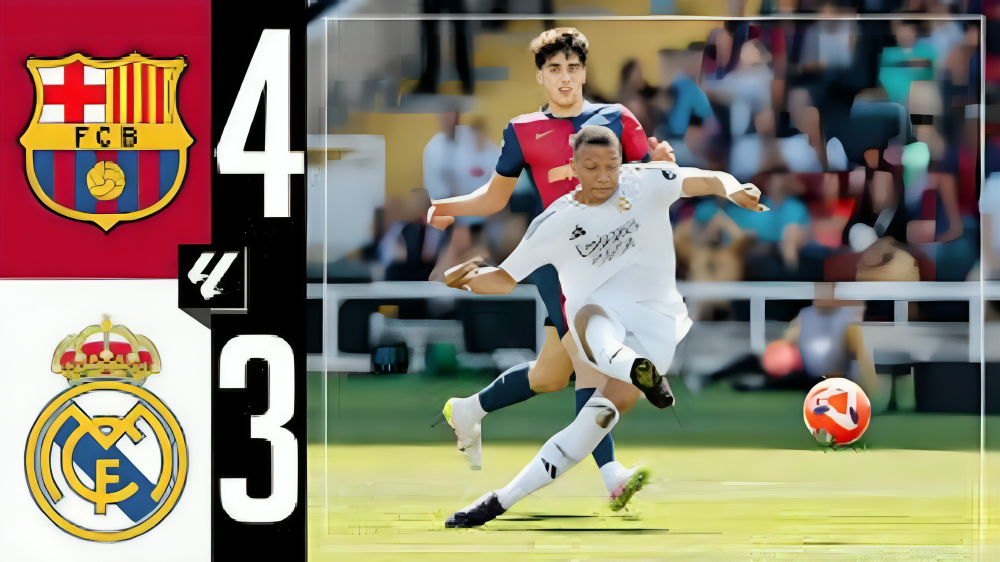

real madrid – barcelona isn’t just a match; it’s a spectacle that lights up the world of football like nothing else. Picture this: two giants of the game, each with a storied legacy, clashing on the pitch in a battle that’s as much about pride as it is about points. From the sun-soaked streets of Spain to living rooms across the globe, real madrid – barcelona captures hearts and sparks endless debates. As an expert who’s followed this rivalry for years, diving into its history, players, and magic feels like uncovering a treasure chest full of excitement. It’s optimistic to think that this duel will keep evolving, bringing joy to fans everywhere. Let’s kick things off by exploring what makes real madrid – barcelona so special.
The Roots of real madrid – barcelona
The story of real madrid – barcelona goes way back, rooted in the early days of Spanish football. Real Madrid was founded in 1902, becoming the club of the capital, while Barcelona came to life in 1899, representing the vibrant Catalan spirit. Their first official meeting happened in 1902, but it wasn’t until the 1920s that the rivalry really heated up. Back then, football was more than a game; it was a way for regions to express their identities in a country full of contrasts.
Over the decades, real madrid – barcelona has mirrored Spain’s own ups and downs. During the tough times of the Spanish Civil War in the 1930s, Barcelona suffered greatly, losing their president Josep Sunyol to execution under Franco’s regime. Real Madrid, on the other hand, was seen as tied to the central power in Madrid. This created a divide that went deeper than sport—Barcelona stood for Catalan independence and culture, while Real Madrid embodied national unity. Yet, here’s the optimistic side: despite those shadows, the rivalry has grown into a celebration of resilience and passion.
Fast forward to the post-war era, and [real madrid – barcelona] became a symbol of recovery. In the 1950s, Real Madrid’s signing of Alfredo Di Stéfano sparked controversy, as Barcelona felt robbed of the player. That moment fueled the fire, leading to intense matches that drew crowds from all over. Today, with over 250 official clashes, Real Madrid edges ahead with 105 wins to Barcelona’s 103, and 52 draws. It’s neck-and-neck, which keeps the excitement alive. Who knows what the next chapter will bring? This foundation shows why [real madrid – barcelona] endures—it’s built on history that’s as rich as it is riveting.
Legendary Players Who Defined real madrid – barcelona
No discussion of real madrid – barcelona would be complete without spotlighting the stars who’ve lit up the pitch. These players didn’t just score goals; they became legends, turning ordinary games into epic tales. Take Lionel Messi, Barcelona’s wizard from Argentina. Over his 17 years at the club, he netted 26 goals in El Clásico, the most ever in this rivalry. His dribbles were like poetry, weaving through defenses with ease. On the other side, Cristiano Ronaldo brought raw power to Real Madrid, smashing in 18 goals against Barcelona. Their head-to-head duels were the stuff of dreams—two GOATs (that’s Greatest Of All Time, folks) pushing each other to greatness.
But it’s not just the modern era. Alfredo Di Stéfano, Real Madrid’s Argentine maestro in the 1950s and 60s, scored 14 times in these matches, helping his team dominate early on. For Barcelona, László Kubala, a Hungarian forward, was a hero in the same period, bagging 4 goals and charming fans with his flair. Then there’s Francisco Gento, Real’s speedy winger, who played in more Clásicos than anyone—32 appearances!
- Messi’s Magic: Remember his solo run in 2007, leaving defenders in the dust? It was a moment that screamed genius.
- Ronaldo’s Fire: His hat-trick in 2010 showed why he’s a scoring machine, even under pressure.
- Di Stéfano’s Dominance: He led Real to five straight European Cups, but his Clásico battles were personal triumphs.
- Xavi and Iniesta: Barcelona’s midfield maestros controlled games like conductors, with Iniesta’s 2009 Champions League winner against another foe echoing in Clásico lore.
These icons crossed paths, sometimes even switching sides, like Luis Figo, who went from Barcelona to Real Madrid in a controversial 2000 transfer that fans still boo about. Or Ronaldo Nazário, the Brazilian striker who dazzled for both. Their stories add layers to real madrid – barcelona, proving that talent transcends teams. Optimistically, today’s stars like Vinícius Júnior for Real and Pedri for Barca are carrying the torch, promising more brilliance ahead.
Unforgettable Matches from real madrid – barcelona
Ah, the matches! real madrid – barcelona has gifted us moments that’ll live forever. One standout is the 5-0 Barcelona thrashing of Real Madrid in 2010 at Camp Nou. Under Pep Guardiola, Barca’s tiki-taka style—short, precise passes—overwhelmed José Mourinho’s side. David Villa scored twice, and it felt like Barcelona was untouchable. Wow, what a statement!
Then there’s the 6-2 Barcelona win in 2009, also at Camp Nou. Lionel Messi’s brace helped seal a night that showcased Barca’s golden era, en route to a treble. Real Madrid fans might cringe, but even they admit it was football at its finest. Flipping the script, Real’s 3-1 victory in 2011 at Bernabéu, with Ronaldo’s late winner, sparked wild celebrations. His “calma” pose—calm down, he gestured—became iconic.
Don’t forget the 1943 Copa del Generalísimo semi-final, where Franco’s influence loomed large. Barcelona won the first leg 3-0, but after threats, they lost the return 11-1— a dark chapter, yet it highlights the rivalry’s depth. More recently, in 2024, Barcelona’s 4-0 upset at Bernabéu under Hansi Flick stunned everyone, with goals flying in like fireworks.
To break it down, here’s a table of some top Clásicos:
| Date | Score (Barca – Real) | Venue | Key Moment |
|---|---|---|---|
| Nov 29, 2010 | 5-0 | Camp Nou | Villa’s brace, tiki-taka dominance |
| May 2, 2009 | 6-2 | Camp Nou | Messi’s magic, treble path |
| Apr 17, 2011 | 0-1 | Bernabéu | Ronaldo’s winner and calma |
| Oct 26, 2024 | 4-0 | Bernabéu | Flick’s tactics shine |
| Jun 11, 2023 | 1-2 | Camp Nou | Vinícius’ late equalizer |
These games aren’t just results; they’re turning points that keep real madrid – barcelona fresh and thrilling. Each one reminds us why football’s the beautiful game—full of surprises and sheer joy.
The Cultural and Political Layers of real madrid – barcelona
Beyond the goals, real madrid – barcelona weaves into Spain’s cultural fabric like threads in a tapestry. Barcelona, or Barça, has long been a banner for Catalan identity. The club’s motto, “Més que un club” (more than a club), captures its role as a voice for regional pride, especially during Franco’s dictatorship when Catalan language and symbols were suppressed. Matches became quiet protests, with fans waving flags that said more than words.
Real Madrid, meanwhile, was viewed as the establishment’s team, backed by the regime. Yet, it’s optimistic to note how both clubs now unite people beyond politics. El Clásico isn’t about hate; it’s a cultural clash that enriches Spanish heritage. Think of the street parties in Madrid and Barcelona—singing, dancing, even if nerves are on edge.
Globally, real madrid – barcelona influences fashion, music, and media. Songs like “Waka Waka” tie into football’s vibe, and documentaries dive into its socio-political side. The rivalry highlights unity in diversity, showing how sport can bridge divides. In tough times, like Spain’s economic woes, these games lift spirits, fostering hope and community. It’s heartening to see young fans from different backgrounds cheering together, proving real madrid – barcelona positive power.
Tactical Brilliance in real madrid – barcelona Encounters
Tactics in real madrid – barcelona have evolved dramatically, turning each match into a chess game on grass. In the early days, it was straightforward: long balls and physical play. But the 1970s brought flair, with Johan Cruyff joining Barcelona and introducing “Total Football”—fluid positions and pressing high up the pitch.
By the 2000s, Barcelona perfected tiki-taka under Guardiola, emphasizing possession and quick passes. Real Madrid countered with counter-attacks, using speedsters like Ronaldo to strike fast. Mourinho’s 2010s era added grit, with bus-parking defenses to frustrate Barca’s rhythm.
Nowadays, under coaches like Carlo Ancelotti for Real and Hansi Flick for Barca, we see hybrid styles. Real deploys a 4-3-3 with wing overloads, while Barca mixes possession with vertical runs. In the 2025 Supercopa, Barca’s 5-2 win showcased Flick’s high press, forcing errors from Real’s backline. It’s fascinating—tactics adapt, but the intensity never fades.
Bullet points on key evolutions:
- Possession vs. Pace: Barca holds the ball (often 60%+), Real exploits transitions.
- Pressing Wars: Both teams now press aggressively, leading to end-to-end thrillers.
- Set-Piece Smarts: Corners and free-kicks decide tight games, with specialists like Modrić pulling strings.
- Data-Driven Decisions: Analytics shape subs, making matches smarter than ever.
This tactical dance keeps real madrid – barcelona innovative, optimistic for fans who love seeing football’s brainy side shine.
The Passionate Fans of real madrid – barcelona
Fans make real madrid – barcelona pulse with life. In Barcelona, ultras like Boixos Nois create a cauldron at Camp Nou (or temporary homes during renovations), chanting in Catalan and waving senyeres. Madrid’s Ultras Sur at Bernabéu bring thunderous noise, with flares and drums that shake the stands.
But it’s not all intensity; there’s joy too. Families pass down scarves, and kids dream of glory. Rivalries spark banter—harmless jabs over tapas—but unite in respect for the game. Optimistically, fan culture promotes inclusivity, with women’s sections growing and global supporters clubs fostering friendships.
Challenges exist, like occasional flare-ups, but initiatives like joint anti-racism campaigns show progress. real madrid – barcelona fans are the heartbeat, turning stadiums into fortresses of fervor.
Global Appeal of real madrid – barcelona
real madrid – barcelona isn’t confined to Spain; it’s a worldwide phenomenon. With over 660 million viewers per Clásico, it dwarfs many events. Real Madrid boasts 350 million fans globally, Barca close at 330 million, spanning Asia, Africa, and the Americas.
In the US, ESPN campaigns hype it like the Super Bowl. In Asia, academies train kids in both styles. Social media amplifies this—hashtags trend worldwide, connecting distant supporters. It’s uplifting how real madrid – barcelona inspires unity, from street games in Brazil to pub watches in England. This reach ensures football’s spirit spreads far and wide.
Looking Ahead: The Future of real madrid – barcelona
The horizon for real madrid – barcelona looks bright. With the 2025-26 season’s first Clásico set for October 25-26 at Bernabéu, anticipation builds. New talents like Lamine Yamal for Barca and Endrick for Real promise fresh rivalries. Coaches innovate, and with Barca’s Camp Nou rebuild nearing end, atmospheres will soar.
Challenges like financial fair play exist, but both clubs’ resilience shines. Optimistically, real madrid – barcelona will adapt, perhaps even going global with neutral-venue games. The future? More magic, more memories.
Why real madrid – barcelona Continues to Captivate
In wrapping up, real madrid – barcelona stands as football’s crown jewel, blending history, skill, and heart. From Di Stéfano’s era to Messi’s marvels, it’s evolved into a beacon of what’s great about the sport. Sure, tensions arise, but the optimism lies in its ability to unite and inspire. As we look forward, one thing’s clear: [real madrid – barcelona] will keep thrilling generations, proving that some rivalries are timeless. What a privilege to witness it!